The food
Creole or Cajun: what is actually on the jazz brunch buffet
Gumbo, grillades, étouffée and bananas foster explained: where each dish comes from, how Creole cooking differs from Cajun, and what to try first.
Reserve your table ↗Quick answer
The brunch buffet is mostly Creole cooking, the city style of New Orleans, with breakfast dishes alongside. Explore Louisiana says Creole food grew up in New Orleans from French, Spanish, African, Caribbean, Native American, German and Italian influences and often uses tomatoes, while Cajun cooking comes from Acadians in the countryside. Gumbo, red beans and rice, shrimp étouffée and bananas foster are all on the booking page's list, though dishes vary by day.
Two cuisines, one state
People use Creole and Cajun as if they meant the same thing, and on a Louisiana menu they often sit side by side. Explore Louisiana draws the line this way: Creole cooking emerged in New Orleans from a blend of French, Spanish, African, Caribbean, Native American, German and Italian influences, and it credits enslaved African and Caribbean cooks in wealthy households with shaping much of its character. Cajun cooking is rooted in the French Acadians who were removed from Acadia in the 1700s and settled in rural south Louisiana, where preserved pork products such as boudin, tasso and andouille became staples. The shorthand, repeated by Wikipedia as well, is that Creole is city food and Cajun is country food.
The tomato test and the roux
Explore Louisiana gives two practical markers. Creole dishes typically include tomatoes and Cajun dishes typically do not, so a Creole gumbo or jambalaya has tomato in it where a Cajun one is tomato-free. It also says a Creole roux is made with butter and flour while a Cajun roux uses oil and flour, and that both cuisines share the base of onion, celery and bell pepper. It adds that Cajun food is well seasoned rather than necessarily spicy. These are tendencies, not laws, and the same article notes exceptions such as sauce piquante, a Cajun dish that uses tomatoes.
The breakfast side of the buffet
The booking page lists eggs, grits and grillades, biscuits and an omelette bar. Wikipedia lists grillades as a main dish that is also a breakfast item served with grits, without describing it in detail, so ask a server on the day what the kitchen is serving under that name. The breakfast half of the table is what makes the meal a brunch rather than a lunch, and it is also the part least tied to Louisiana, so many visitors take eggs and biscuits first and then return for the heavier dishes.
The Creole classics
The lunch side is where the booking page names chicken and sausage gumbo, red beans and rice, turtle soup au sherry, corn maque choux and shrimp étouffée. Wikipedia describes gumbo as Louisiana's signature stew-like soup, descended from West African okra soups and thickened with okra or filé, ground sassafras leaves. Étouffée is a smothering technique, most often with crawfish or shrimp. Red beans and rice is, by Wikipedia's account, a very common New Orleans dish, traditionally cooked on Mondays, which were washdays, because the beans could simmer while clothes were scrubbed. The booking page says heavier lunch dishes appear after 11:30 am, so the earlier you arrive, the more the table leans toward breakfast.
The desserts
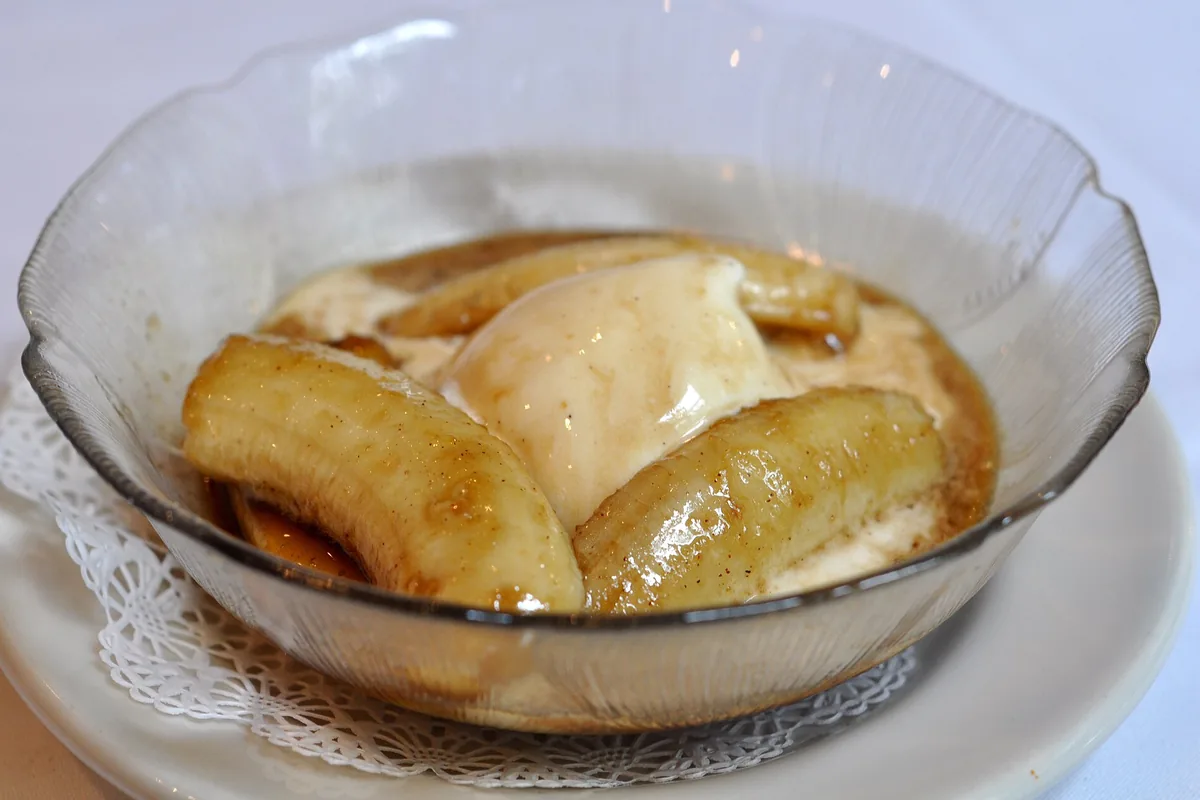
The booking page names bananas foster and bread pudding with whiskey sauce. Wikipedia says bananas Foster was created in 1951 at Brennan's, when it was still called Owen Brennan's Vieux Carré, by Ella Brennan and the chef Paul Blangé, who adapted a dish from Ella's mother, and was named for Richard Foster, a friend of Owen Brennan and chairman of the New Orleans Crime Commission. Bread pudding, Wikipedia says, is an old dish made from leftover stale bread, and in Louisiana it is typically a sweet dessert with a sauce such as whiskey, rum or caramel.
How to build a plate
A sensible first round takes a little of everything lighter: a spoon of gumbo, some red beans and rice, a few shrimp in the étouffée, and a taste of the corn dish. Leave room for a second visit to the table once you know which dish you liked, and keep dessert for the end. If you avoid meat or shellfish, ask what is on the buffet that day, since several named dishes are built on sausage, shrimp or pork. Dishes vary by day, so treat every name in this guide as a likely item, not a guarantee.
Frequently asked questions
Is the food Creole or Cajun?
Mostly Creole, the New Orleans style, with breakfast dishes alongside. Explore Louisiana describes Creole as city food.
Is the buffet spicy?
Explore Louisiana says Cajun food is well seasoned rather than necessarily spicy, and heat depends on the dish. Ask a server about any dish you are unsure of.
Will the same dishes be there every day?
No. The booking page says dishes vary by day.
Sources