The music
How New Orleans got its jazz, and then its jazz brunch
From Congo Square and Buddy Bolden to a clarinet beside the gumbo: where the city's music came from, and how the idea of brunch met it.
Reserve your table ↗Quick answer
Jazz took its famous form in New Orleans between the 1890s and the mid-1910s, drawing on roots Wikipedia traces to Congo Square, brass bands and Creole musicians, and the brunch with a band is a much later pairing. Wikipedia says brunch itself reached New Orleans in the late 1890s, while accounts of the jazz brunch point to Commander's Palace in the early 1970s, with sources differing on the exact date.
Sundays in Congo Square
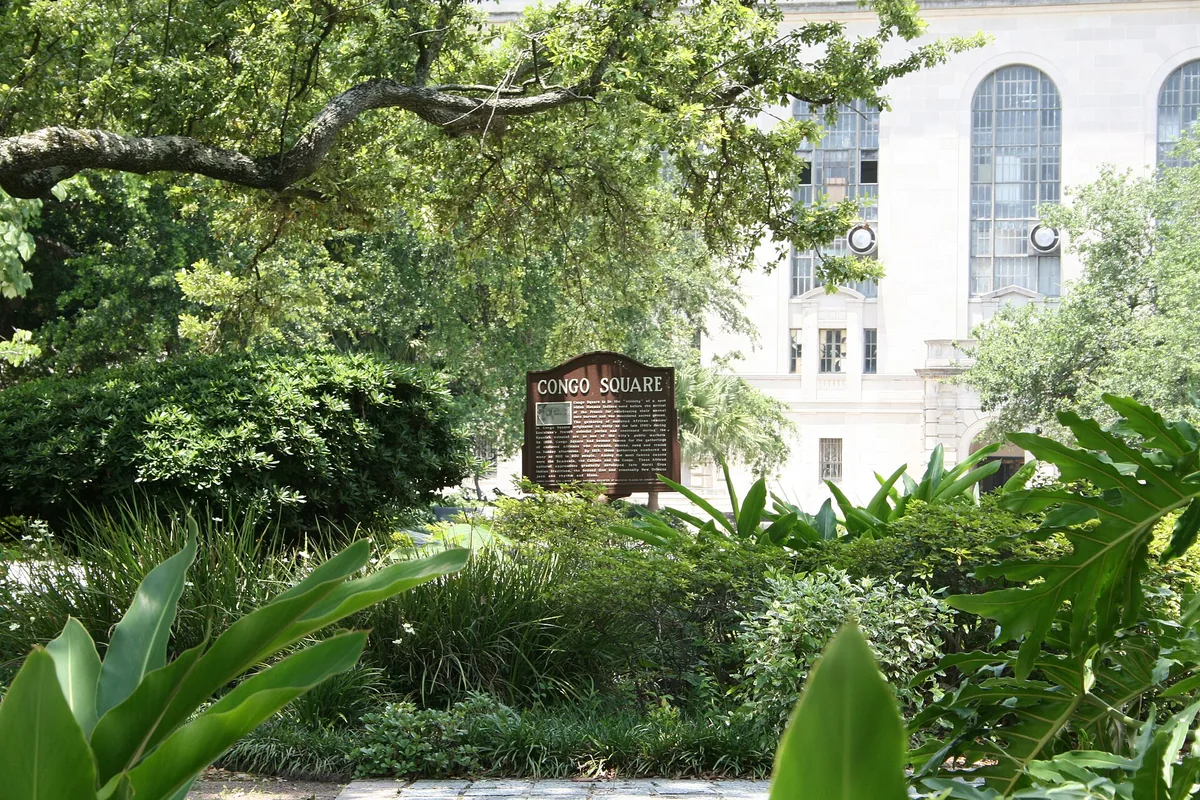
In Wikipedia's telling, enslaved people in colonial New Orleans often had Sundays free under French and Spanish rule, though no law guaranteed any right to gather. An 1817 city ordinance confined their gatherings to Congo Square, in what is now Tremé, where they held markets, sang, danced and played music, usually on Sunday afternoons. The architect Benjamin Latrobe recorded seeing 500 to 600 people dancing there in 1819. Wikipedia says the square shaped African American music, jazz above all, and that rhythms first heard there still appear in jazz funerals, second line parades and Mardi Gras Indian parades. The square lies within Louis Armstrong Park, just across Rampart Street from the French Quarter.
Brass bands, dance halls and a new sound
The Wikipedia entry on the music of New Orleans says the style probably took its famous form between the 1890s and the mid-1910s, and that the word jazz became common only in the late 1910s, when the music was often called ragtime or hot music before. Brass bands played dirges and upbeat tunes for jazz funeral processions from the 1890s on and marched in second line parades, and by 1838, a local paper complained, they could be found on every corner. Many instruments were bought second-hand, including used military band instruments. Creole musicians also contributed. Jazz and brass bands influenced each other, with jazz bands moving beyond the marching meter and marching bands improvising more.
Buddy Bolden
Wikipedia calls Charles Joseph Buddy Bolden (1877 to 1931) an American cornetist from New Orleans whom contemporaries and later scholars saw as a key figure in the New Orleans style. His band was at its peak from about 1900 to 1907, and many early musicians credited it with originating jazz, a looser, improvised ragtime with blues added. The jazz historian Ted Gioia called him the father of jazz but qualified that Bolden mastered the recipe more than invented it. Wikipedia says no recordings are known to survive. He spent the rest of his life in a state hospital after an illness in 1907 and died in 1931.
Louis Armstrong
Wikipedia says Louis Armstrong was born in New Orleans on 4 August 1901, though the date is disputed. He grew up in poverty, was sentenced in December 1912 to the Colored Waif's Home, a boys' reform facility, and learned cornet in its band. In 1922, King Oliver invited him to Chicago to play second cornet in Oliver's Creole Jazz Band. Wikipedia also records that his favourite food was red beans and rice, and that he signed letters "Red Beans and Ricely Yours", a small link between the music and the buffet.
The small-band sound at a brunch table
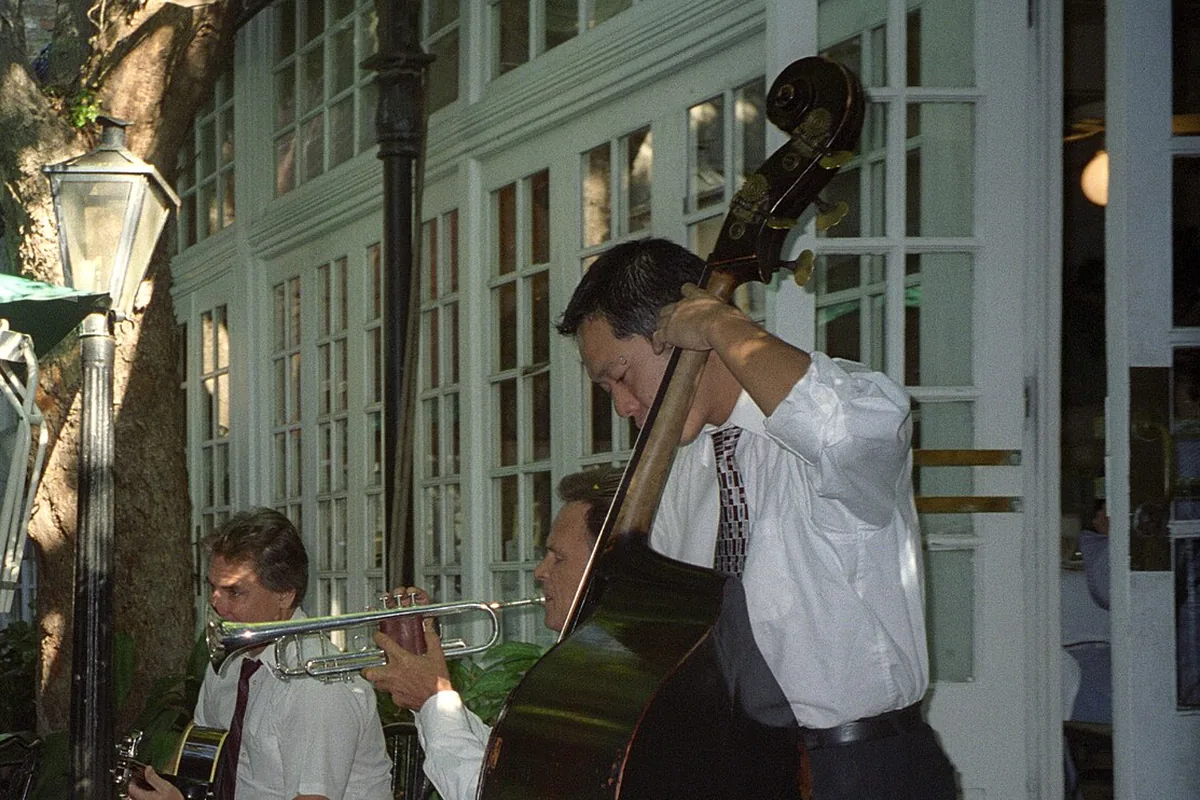
What most visitors hope to hear over brunch is the old-style ensemble. Wikipedia pictures three horn voices, trumpet or cornet, trombone and clarinet, backed by at least two of banjo or guitar, bass or tuba, piano and drums, with the front players weaving improvised lines around the melody. It adds that the name Dixieland was pinned on early jazz afterwards, by revivalists in the 1940s and 1950s, after the Original Dixieland Jass Band's 1917 records spread the sound. A trio of bass, banjo and clarinet, as in the booking page's photograph, keeps the balance of tune and rhythm in a size that can move between tables.
Where brunch comes in
Wikipedia says the word brunch was coined in Britain in 1895, and that it reached New Orleans in the late 1890s, with Madame Elizabeth Begué credited as the first to serve a second breakfast at her restaurant, with meals of six to seven courses. The jazz brunch is a later invention. Accounts differ: one points to the early 1970s, when Dick Brennan invited a jazz trio to play at Commander's Palace for the after-church crowd, and another dates the tradition to 1974, when the trumpeter Alvin Alcorn played there. Neither is a primary record, so this page treats the date as unsettled and the pairing as a New Orleans habit rather than an ancient one.
Frequently asked questions
Did jazz start in the French Quarter?
Not in one place. Wikipedia describes jazz forming across the city between the 1890s and mid-1910s, with Congo Square, brass bands and Creole musicians all contributing.
Who started the jazz brunch?
Accounts point to Commander's Palace in the early 1970s, with sources differing on the exact date.
What instruments will I hear?
The booking page's photograph shows bass, banjo and clarinet. The line-up on your day can differ.
Sources